Sports injuries are a common challenge for athletes at every level, from recreational runners to elite professionals. Whether caused by overuse, impact, or sudden strain, injuries can interrupt training, reduce performance, and prolong recovery if not managed properly.
Alongside physiotherapy, rest, and strength rehabilitation, Hyperbaric Oxygen Therapy (HBOT) is increasingly being used as a supportive therapy for sports injuries. By enhancing oxygen delivery to injured tissues, (HBOT) may help accelerate healing, reduce inflammation, and support a safer return to activity.
This article explores common sports injuries, the role of oxygen in recovery, and how (HBOT) is being used in both medical and performance-focused settings.
Understanding Sports Injuries
Sports injuries typically occur when the body is placed under physical stress that exceeds its ability to adapt or recover. They may develop suddenly, such as a ligament tear, or gradually over time due to repetitive strain.
Common sports injuries include:
- Muscle strains and tears
- Ligament injuries (such as ACL or ankle sprains)
- Tendon injuries, including Achilles or patellar tendinopathy
- Joint injuries affecting the knee, shoulder, or hip
- Stress fractures and bone bruising
In many cases, injury recovery is slowed by inflammation, swelling, reduced circulation, and limited oxygen delivery to damaged tissue.
Why Oxygen Matters in Injury Recovery
Oxygen is essential for tissue repair. It plays a key role in:
- Collagen production
- Cellular repair and regeneration
- Reducing infection risk
- Supporting immune and inflammatory responses
Following injury, swelling and inflammation can restrict blood flow, reducing oxygen availability at the site of damage. This can delay healing and prolong pain or stiffness.
By increasing the amount of oxygen delivered to injured tissues, Hyperbaric Oxygen Therapy (HBOT) aims to support the body’s natural recovery processes.
What Is Hyperbaric Oxygen Therapy (HBOT)?
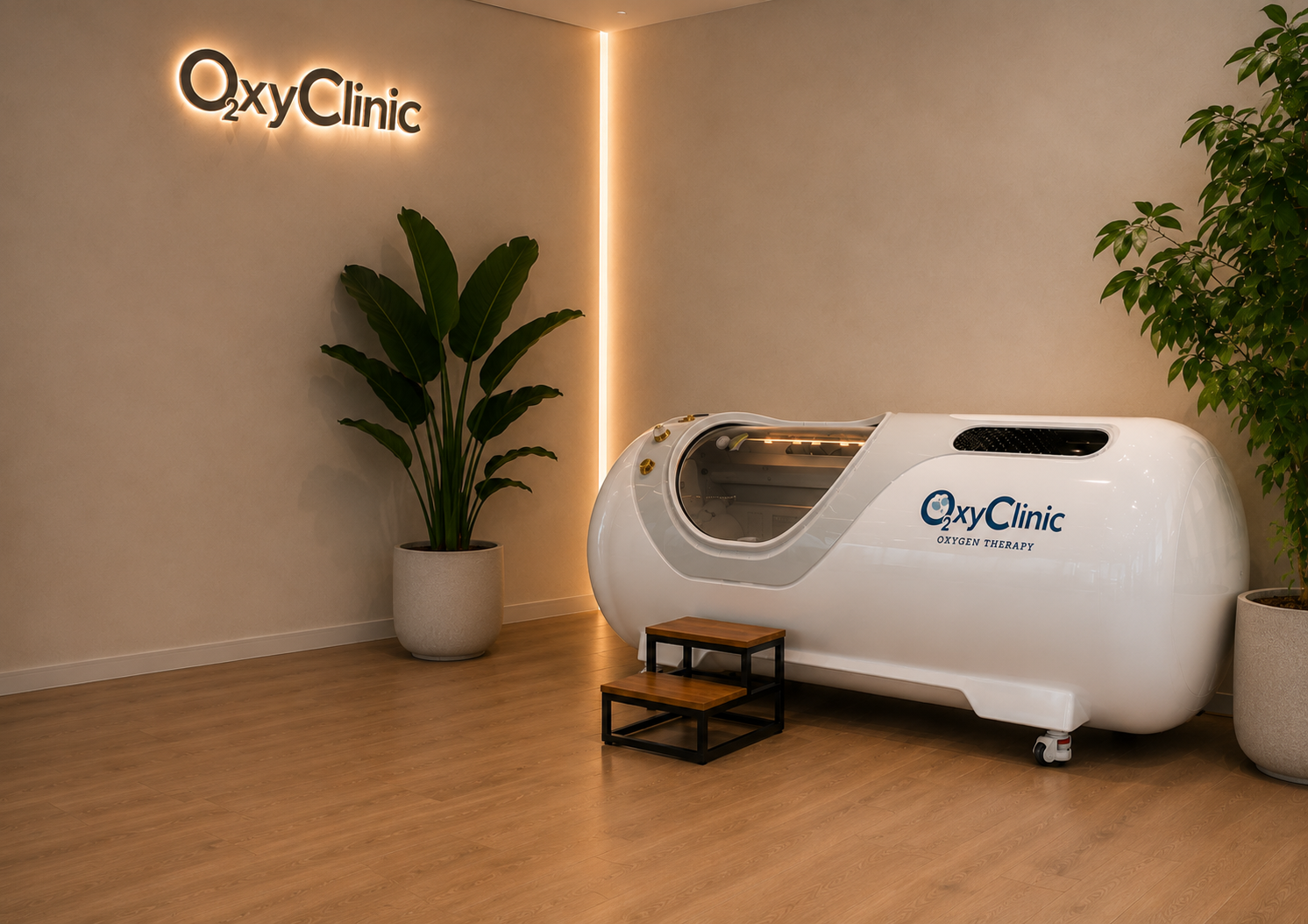
Hyperbaric Oxygen Therapy (HBOT) is a non-invasive treatment in which an individual breathes 100% pure oxygen inside a pressurised chamber. The pressure is higher than normal atmospheric levels, allowing oxygen to dissolve directly into the bloodstream and surrounding fluids.
This increased oxygen availability enables oxygen to reach injured or poorly perfused tissues more effectively, even where circulation is temporarily compromised.
How (HBOT) May Support Sports Injury Recovery
Reducing Inflammation and Swelling
Inflammation is a natural response to injury, but excessive or prolonged inflammation can slow recovery. (HBOT) has been shown to help reduce inflammatory markers and tissue swelling.
Reduced inflammation may lead to:
- Less pain and stiffness
- Improved range of motion
- Earlier progression through rehabilitation stages
Supporting Muscle and Soft Tissue Healing
Muscle strains and soft tissue injuries rely on oxygen for repair and regeneration. (HBOT) enhances oxygen delivery to damaged fibres, supporting tissue repair and recovery.
This may be particularly beneficial for:
- Hamstring and calf strains
- Quadriceps and groin injuries
- Muscle tears following high-intensity activity
Promoting Tendon and Ligament Repair
Tendons and ligaments have limited blood supply, which can make them slow to heal. (HBOT) may support angiogenesis, the formation of new blood vessels, improving oxygen and nutrient delivery over time.
This is relevant for injuries such as:
- Achilles tendon injuries
- Rotator cuff strains
- Ankle and knee ligament injuries
Supporting Bone Healing
Bone injuries, including stress fractures and bone bruising, require adequate oxygen for healing. (HBOT) increases oxygen levels in bone tissue, which may support bone repair and recovery.
This makes (HBOT) a supportive option during recovery from impact injuries or repetitive load injuries common in endurance sports.
(HBOT) in Athletic Performance and Recovery
Beyond injury treatment, (HBOT) is increasingly used as part of performance and recovery programmes.
Faster Recovery Between Training Sessions
Athletes often use (HBOT) to reduce post-exercise soreness and fatigue. Improved oxygen delivery may help muscles recover more efficiently between training sessions, supporting consistency and training quality.
Supporting Return to Sport
A structured return-to-sport process is essential following injury. By supporting tissue healing and reducing inflammation, (HBOT) may help athletes progress through rehabilitation more confidently when used alongside physiotherapy and medical care.
What to Expect During an (HBOT) Session
An (HBOT) session typically lasts 60 to 90 minutes. During treatment, the individual relaxes inside the chamber while breathing pure oxygen. The process is painless, although mild ear pressure may be felt during pressurisation.
Sports injury recovery programmes often involve multiple sessions over several weeks, depending on injury severity, training demands, and clinical guidance.
Is (HBOT) Safe for Sports Injuries?
When delivered by trained professionals, (HBOT) is considered safe and well tolerated. Side effects are usually mild and temporary. As with any recovery or medical therapy, it should be used under professional supervision and as part of a broader rehabilitation plan.
Final Thoughts: Sports Injuries and (HBOT)
Sports injuries can be frustrating and disruptive, particularly for individuals eager to return to training or competition. While (HBOT) is not a replacement for physiotherapy, strength rehabilitation, or medical care, it may offer valuable support by enhancing oxygen delivery, reducing inflammation, and supporting tissue repair.
For athletes and active individuals seeking a comprehensive approach to injury recovery, Hyperbaric Oxygen Therapy (HBOT) is increasingly recognised as a useful adjunct in both medical rehabilitation and performance-focused recovery.
As research continues to grow, (HBOT) is likely to play an expanding role in the way sports injuries are managed across clinical and wellness settings.
For more information on how you can benefit from HBOT, or to book a taster session, get in touch with our expert team here at Oxyclinic